
Where Can I Sell Unused Toner Cartridges for the Best Price?
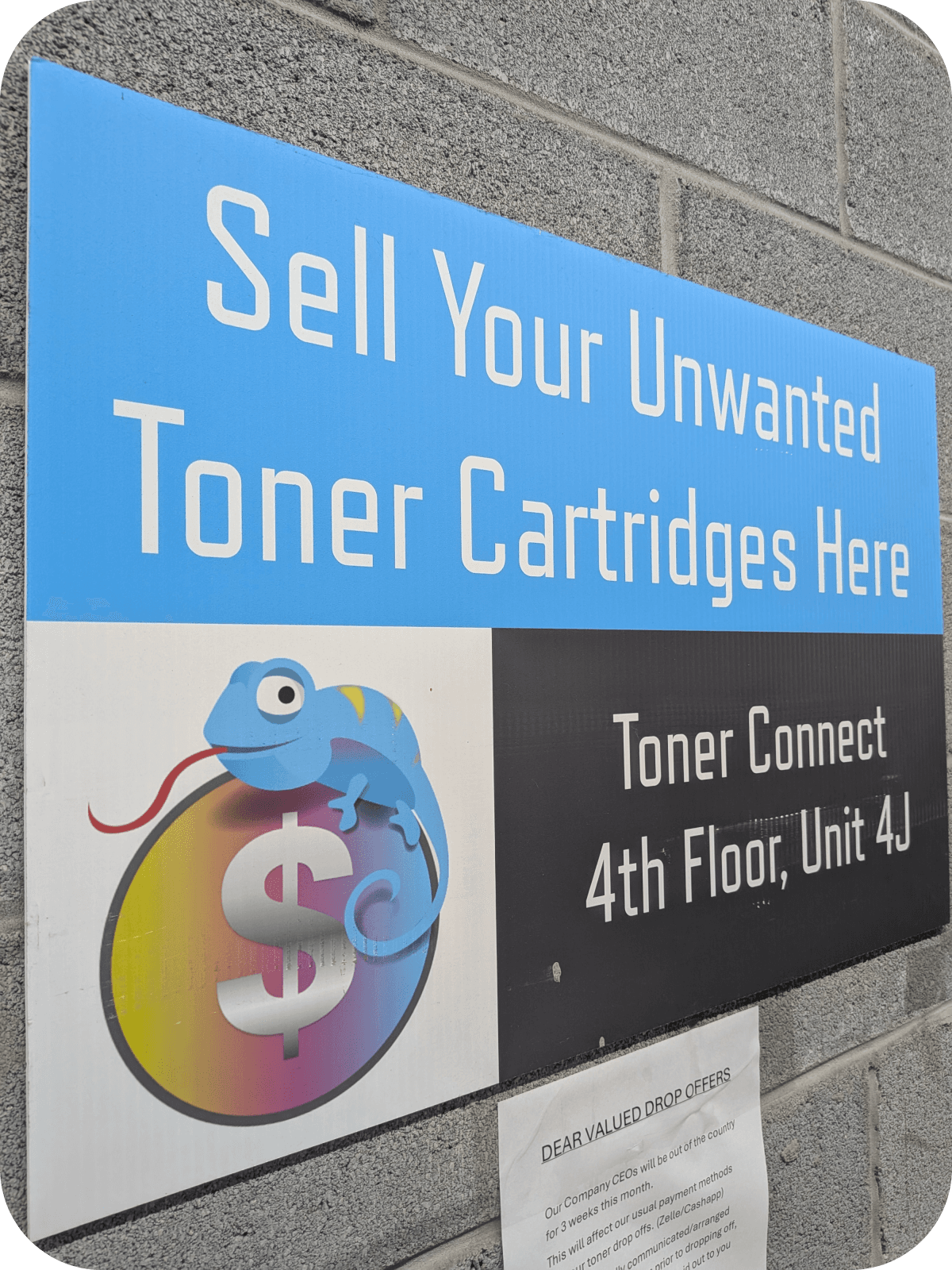
To sell unused toner cartridges for the best price, compare specialized toner buyback companies, online marketplaces, and local buyers. Factory-sealed OEM cartridges typically have stronger resale potential. Toner Connect offers a dedicated option for selling eligible surplus toner, with quotes based on brand, model, condition, quantity, and current demand.
Where Can You Sell Unused Toner Cartridges?
Specialized toner buyers are often the simplest option, while online marketplaces provide more control but require more work.
If a printer upgrade, office move, or purchasing mistake has left you with extra toner, throwing it away isn’t your only choice. Several resale channels exist.
Common options include:
- Specialized toner buyback companies
- Online marketplaces
- Local office-supply resellers
- Business liquidation companies
- Local classifieds
- Recycling programs when cartridges have little or no resale value
For sellers who want a toner-specific process rather than creating individual marketplace listings, Toner Connect is one option to consider.
What Does It Mean to Sell Unused Toner Cartridges?
It means reselling cartridges that haven’t been used, typically because they’re surplus to your current printing needs.
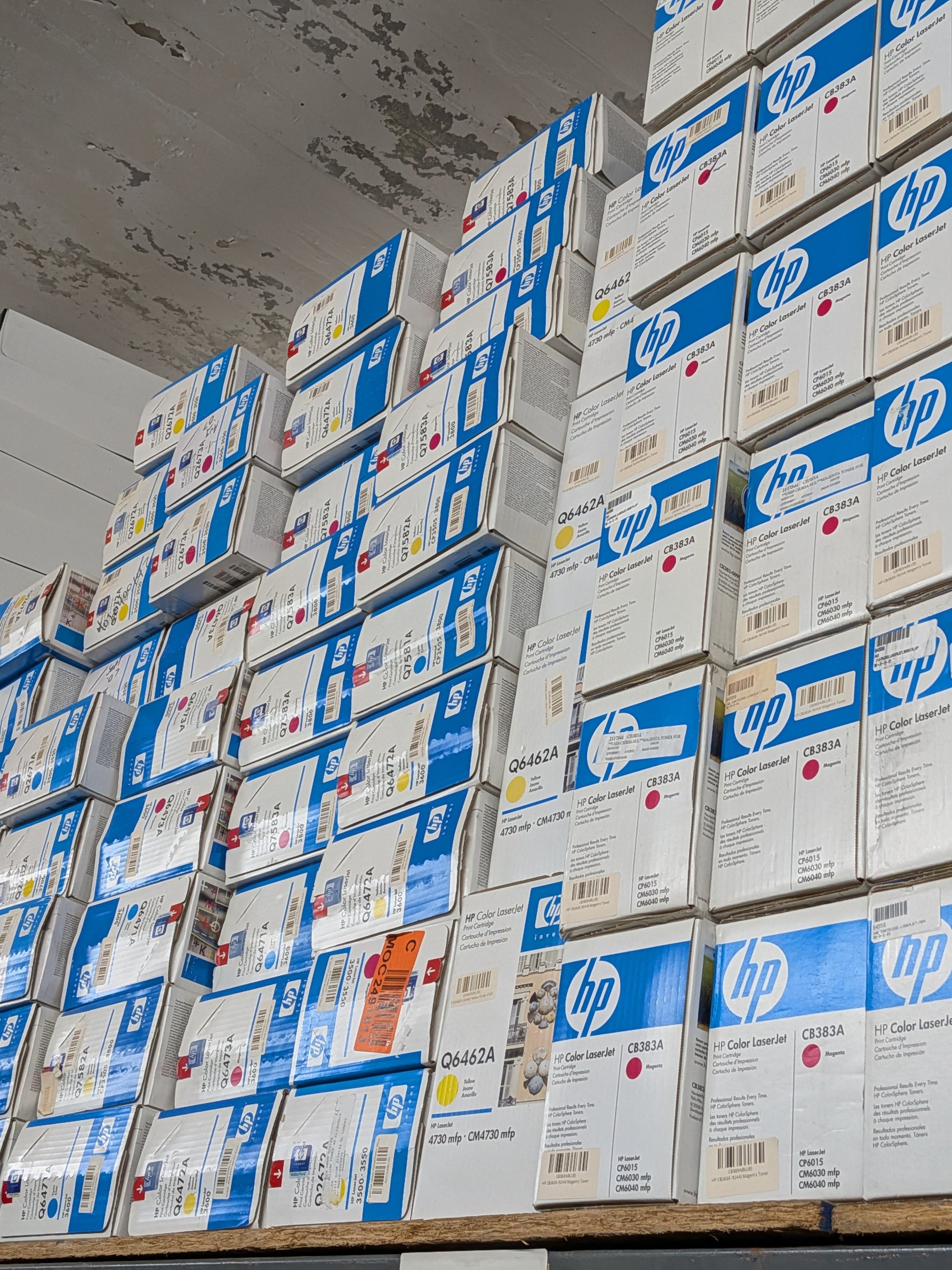
An unused toner cartridge is a cartridge that hasn’t been installed and consumed in a printer. For resale purposes, factory-sealed cartridges in their original packaging are generally easier for buyers to evaluate.
You’ll also encounter several cartridge categories:
- OEM toner: Made or branded by the printer’s original manufacturer.
- Compatible toner: New toner produced by a third-party manufacturer.
- Remanufactured toner: A previously used cartridge that has been rebuilt and refilled.
- Open-box toner: A cartridge whose original packaging or seal has been opened.
These distinctions matter because toner buyers establish their own acceptance requirements.
Is Toner Connect a Good Place to Sell Unused Toner Cartridges?
Toner Connect is designed specifically for people and businesses looking to sell eligible unused OEM toner.
Unlike a general marketplace, Toner Connect focuses on surplus printer supplies. That means sellers don’t have to create a separate consumer-facing listing for every cartridge.
The basic idea is straightforward:
- Identify the toner you have.
- Submit the inventory for evaluation.
- Review the quote for eligible cartridges.
- Follow the provided shipping instructions.
- Complete the transaction after the shipment is received and verified.
You can start at Toner Connect or explore the company’s toner-selling guides.
For offices with several brands and cartridge numbers sitting in a supply room, a specialized toner buyer can be considerably simpler than photographing, listing, negotiating, and shipping every cartridge to a different individual.
Can Online Marketplaces Get You a Better Toner Price?
Potentially, but a higher advertised selling price doesn’t necessarily mean you’ll keep more money.
General marketplaces can expose your cartridges to a large number of buyers. They may be useful when you have a popular cartridge and don’t mind handling the transaction yourself.
However, compare the net amount, not just the listing price.
Potential costs include:
- Marketplace fees
- Payment-processing fees
- Shipping expenses
- Packaging materials
- Returns
- Seller time
- Price negotiations
For example, receiving $100 from a direct buyer isn’t necessarily worse than selling for $120 on a marketplace if fees, shipping, and returns significantly reduce the latter amount.
That’s why the “best price” should mean the best net value after expenses and effort.
Can You Sell Unused Toner Locally?
Yes, although local demand can be more limited than online demand.
Local office-equipment businesses, resellers, classifieds, and business-liquidation companies may be interested in surplus toner.
The advantage is convenience. A local transaction may eliminate shipping.
The disadvantage is reach. Finding someone nearby who needs the exact cartridge model you own can be difficult, especially for older or specialized printer supplies.
Local selling tends to work better when:
- You have common toner models.
- You have a large inventory.
- A nearby business already buys office equipment.
- Avoiding shipping is a priority.
What Determines the Best Price for Unused Toner?
Brand, model number, condition, demand, and quantity are among the biggest factors affecting resale value.

There isn’t one universal price for unused toner cartridges.
Brand and Model
Buyers need the exact cartridge number because different models can have dramatically different demand and value.
Record both the manufacturer and part number.
Examples of useful information include:
- HP 414X / W2020X
- Brother TN-series model number
- Canon cartridge number
- Xerox part number
Don’t submit only the printer model. The cartridge number is usually much more useful for identifying what you’re selling.
OEM Status
Genuine OEM cartridges are different from compatible and remanufactured supplies.
OEM means Original Equipment Manufacturer.
A genuine HP cartridge, for example, is an OEM HP supply. A third-party cartridge designed to fit the same printer is compatible toner rather than OEM toner.
Clearly identifying this distinction helps buyers determine eligibility.
Packaging Condition
Factory-sealed toner in clean original packaging is generally easier to resell.
Before requesting a quote, inspect boxes for:
- Broken seals
- Crushing
- Tears
- Water damage
- Heavy writing
- Removed labels
- Sun fading
- Missing packaging
Don’t open a sealed cartridge simply to inspect what’s inside. Doing so can reduce its resale appeal.
Market Demand
A cartridge’s resale price depends partly on whether people still use the printers it fits.
An old cartridge isn’t automatically valuable because it’s rare.
If relatively few compatible printers remain in use, buyer demand may be limited. Conversely, cartridges for widely deployed business printers can attract stronger interest.
This is why quotes can change over time.
How Do You Get the Best Price When Selling Unused Toner?
Identify your cartridges accurately, preserve their packaging, compare net offers, and request quotes before shipping anything.
Use this simple process:
- Sort cartridges by manufacturer.
- Record each exact model or part number.
- Count the quantity of each model.
- Confirm whether they’re OEM.
- Check factory seals.
- Note packaging damage.
- Take clear photographs.
- Compare realistic net offers.
- Review shipping and payment terms.
- Package accepted toner carefully.
If you’re selling a large quantity, create a spreadsheet using:
Brand | Model | Color | Quantity | OEM | Sealed | Condition
Good information makes it easier for a buyer to evaluate your inventory accurately.

Should You Compare Cartridge Page Yield When Selling Toner?
Page yield helps identify cartridge capacity, but resale value ultimately depends on the specific product and market demand.
High-yield cartridges often carry designations such as X, XL, or other manufacturer-specific labels.
Page yield isn’t simply a guess. Major manufacturers use standardized testing methods. HP, for example, states that monochrome LaserJet toner yields are generally measured using ISO/IEC 19752, while color LaserJet yields use ISO/IEC 19798. HP also notes that actual yield varies with page content, print-job size, environmental conditions, and printing behavior.
That distinction matters when identifying toner. Two cartridges from the same family can have different capacities and therefore shouldn’t be treated as identical inventory.
Is Selling Unused Toner Better Than Recycling It?
If a usable cartridge has legitimate resale demand, reuse can keep the product in service before recycling becomes necessary.
Recycling is valuable, but it doesn’t always need to be the first destination for an unopened usable product.
The U.S. Environmental Protection Agency’s waste-management hierarchy places source reduction and reuse ahead of recycling and composting, followed by energy recovery, treatment, and disposal.
That makes intuitive sense for surplus toner. If an unopened cartridge can still be used by someone with the correct printer, selling it can:
- Recover some of its financial value
- Reduce unnecessary disposal
- Keep usable inventory in circulation
- Clear office storage space
If a cartridge has no resale value, manufacturer or approved recycling programs become the more appropriate option.
Useful Facts About Toner Value and Waste
Cartridge capacities vary enormously, and broader waste statistics highlight the importance of making thoughtful reuse and recycling decisions.
Here are several useful, verifiable examples:
- HP states that LaserJet cartridge yield figures are intended for comparison, not as a guarantee of exactly how many pages an individual user will print.
- HP’s 110A (W1110A) is rated at approximately 1,500 pages, illustrating the capacity of one standard cartridge.
- By comparison, HP lists its 213Y (W2130Y) extra-high-yield black cartridge at 18,000 standard pages.
- In 2025, EPA guidance continued to place source reduction and reuse above recycling in its materials-management hierarchy.
These figures don’t tell you what a cartridge is worth. They demonstrate why exact model identification matters: toner cartridges can differ substantially even when they’re from the same manufacturer.
What Should You Avoid When Selling Unused Toner Cartridges?
Avoid opening sealed products, guessing model numbers, hiding box damage, or assuming retail price equals resale value.
Several mistakes can make it harder to sell unused toner cartridges successfully:
- Opening factory-sealed packaging
- Listing only the printer model
- Confusing OEM and compatible toner
- Hiding damaged boxes
- Using blurry photographs
- Assuming every old cartridge is valuable
- Comparing offers without considering fees
- Shipping before confirming buyer instructions
Retail price is particularly misleading. What a retailer charges for a new cartridge isn’t necessarily what a secondary-market buyer will pay for surplus inventory.
How to Sell Unused Toner Cartridges Through Toner Connect?
Organize your inventory first, then submit accurate cartridge details so eligible toner can be evaluated.
If you’ve decided to try Toner Connect, start at the Toner Connect website.
Before submitting your toner, gather:
- Brand
- Cartridge model or part number
- Quantity
- OEM status
- Seal status
- Packaging condition
- Clear photos when needed
You can also read the Toner Connect blog for additional information about selling, storing, and managing surplus printer supplies.
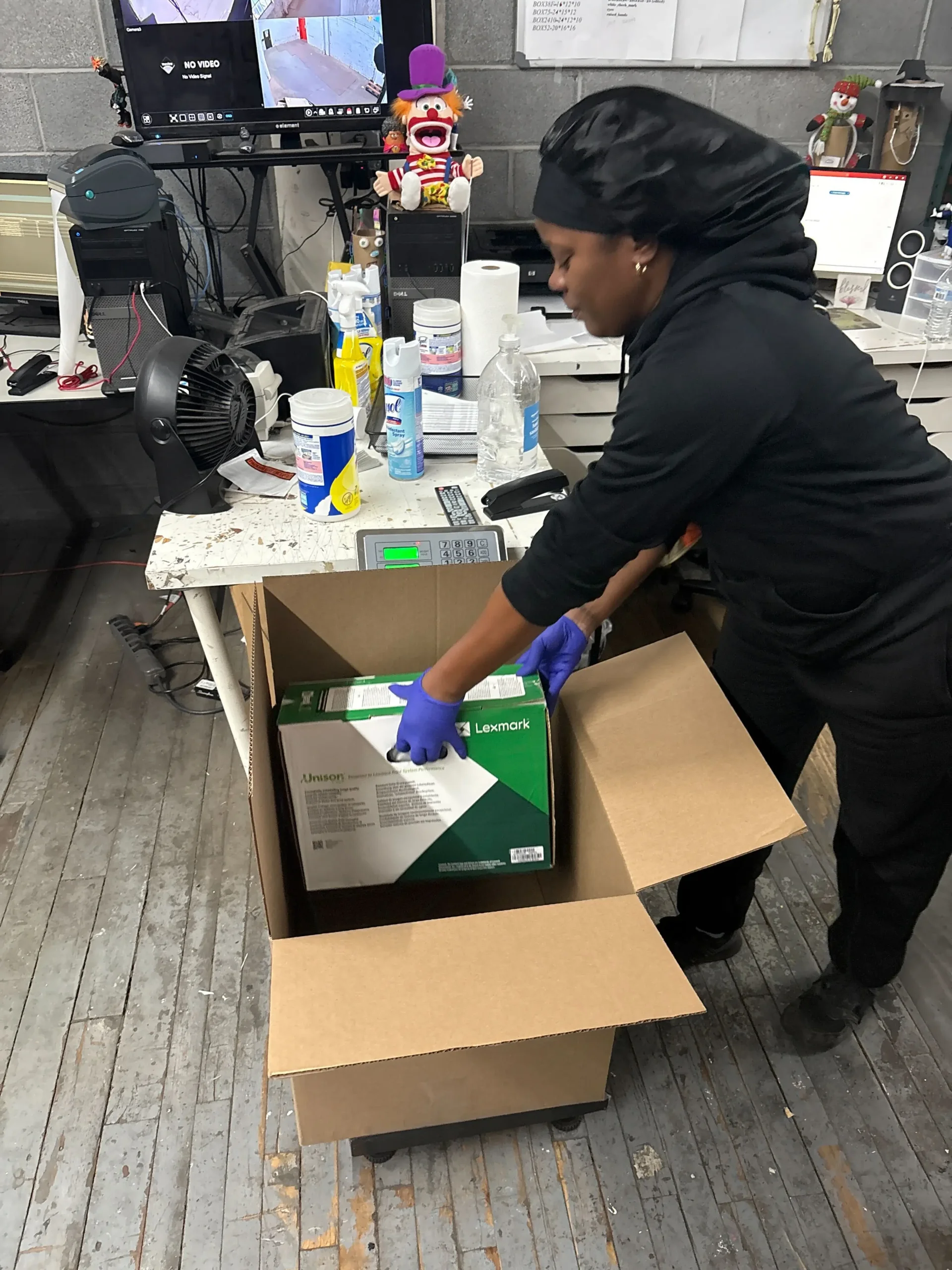
The more accurate your inventory is, the easier it is to evaluate what you actually have.
Frequently Asked Questions About Selling Unused Toner
Most sellers want to know who buys toner, what qualifies, and how to maximize an offer.
Where is the best place to sell unused toner cartridges?
The best option depends on whether you prioritize price, convenience, speed, or control over the transaction.
Specialized toner buyers such as Toner Connect offer a toner-focused process, while marketplaces can provide direct access to individual buyers but require more seller involvement.
Who pays the most for unused toner cartridges?
There is no single buyer that pays the most for every cartridge.
Offers change according to model, quantity, condition, market demand, fees, and shipping arrangements. Compare net offers, not marketing claims about the “highest price.”
Can I sell old unused toner?
Possibly, provided the cartridge is still eligible and there is market demand.
Age alone doesn’t determine resale value. Model demand, OEM status, packaging, and condition all matter.
Can I sell opened toner cartridges?
Opened toner generally has less resale potential than factory-sealed inventory.
Acceptance policies vary between buyers, so disclose the condition accurately before shipping.
Can businesses sell toner in bulk?
Yes, and an inventory spreadsheet can make a large toner lot much easier to evaluate.
Record identical models together with their quantities and conditions instead of entering every cartridge separately.
Conclusion: Where Should You Sell Unused Toner Cartridges?
Look for the option that gives you the best combination of net value, convenience, clear terms, and reliable service.
The best place to sell unused toner cartridges won’t necessarily be the buyer advertising the biggest number. Compare what you’ll actually receive after fees, shipping, time, and other transaction costs.
Factory-sealed OEM toner with accurate model information and clean packaging generally gives you the strongest starting point. If you prefer a specialized toner-buyback process rather than managing individual marketplace listings, Toner Connect is one option for finding out what eligible surplus cartridges may be worth.