
Sell Toner the Smart Way: How to Prepare Unused Cartridges for Resale?
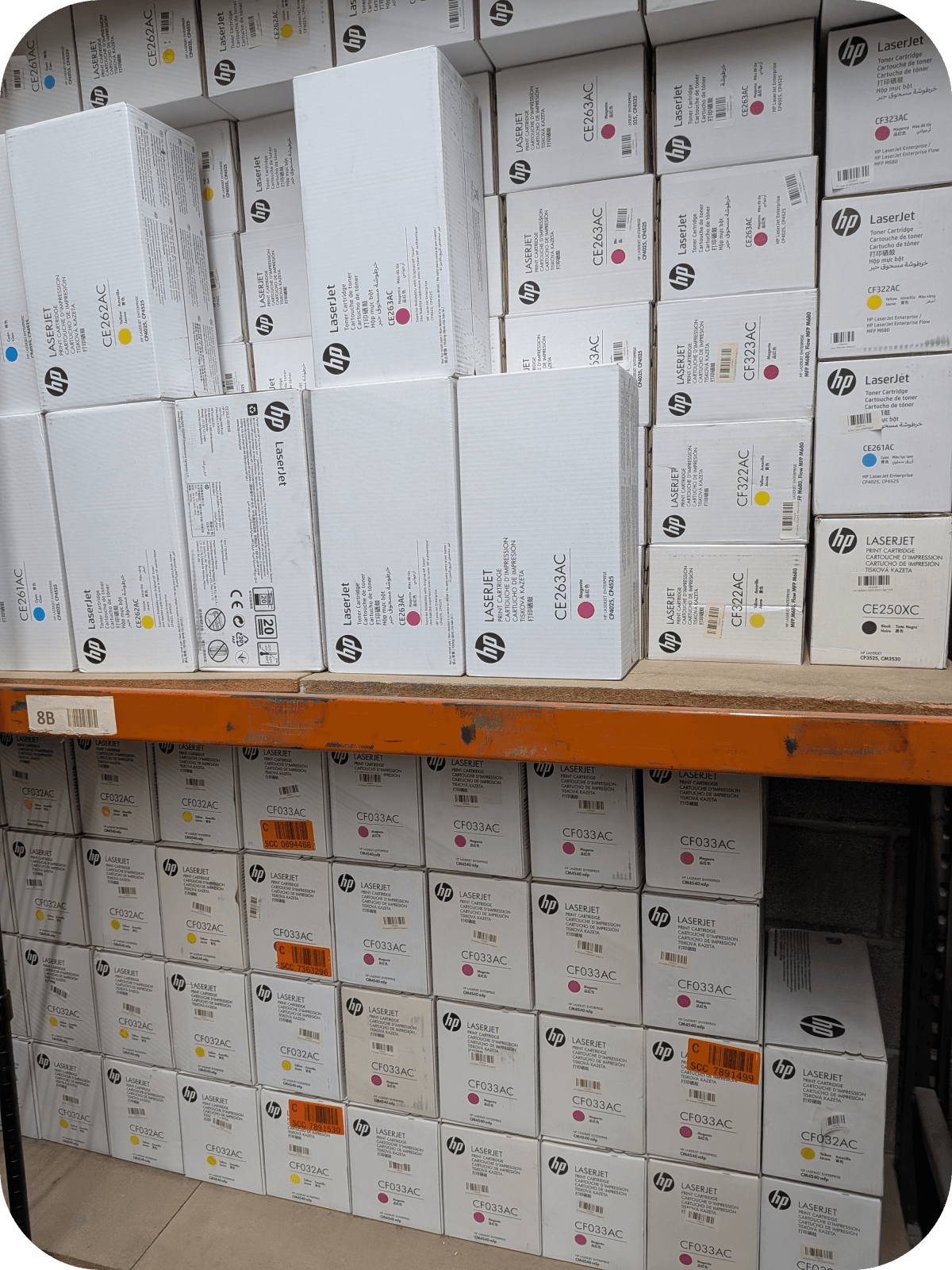
Want to sell toner you no longer need? Start by identifying the exact brand and model, confirming the cartridges are genuine OEM products, checking factory seals, documenting box condition, and counting your inventory. Accurate information and careful storage make it easier for a toner buyer to evaluate eligible cartridges and provide a quote.

How Can You Sell Toner the Smart Way?
You can sell toner more efficiently by organizing and inspecting your cartridges before requesting an offer.
Unused toner often accumulates after businesses replace printers, consolidate offices, over-order supplies, or purchase cartridges for the wrong equipment. Toner Connect identifies printer upgrades, office closures, and over-ordering as common reasons businesses end up with surplus OEM toner.
Before contacting a buyer:
- Sort cartridges by brand.
- Record exact model numbers.
- Count each model.
- Verify OEM status.
- Check factory seals.
- Inspect packaging.
- Photograph your inventory.
- Compare the complete terms of offers.
A few minutes of preparation can prevent confusion later.
What Does It Mean to Sell Toner for Resale?
Selling toner for resale means transferring unused cartridges to a buyer that can put eligible supplies back into circulation.
Not all toner is the same, so understanding a few definitions is useful.
OEM toner: A cartridge manufactured or branded by the printer’s original equipment manufacturer.
Compatible toner: A new third-party cartridge designed for another manufacturer’s printer.
Remanufactured toner: A previously used cartridge that has been rebuilt and refilled.
Factory-sealed toner: A cartridge that remains unopened in its original manufacturer packaging.
If your goal is to sell toner, identify which category you have before requesting a quote. Toner Connect’s February 2026 selling guide specifically focuses on unopened OEM cartridges from brands such as HP, Canon, Brother, and Lexmark.
Who Should Consider Selling Unused Toner?
Offices, schools, healthcare organizations, law firms, IT departments, and other toner-heavy workplaces can benefit from reviewing surplus inventory.
The opportunity isn’t limited to individuals with one extra cartridge.
Why Should Offices Sell Toner After a Printer Upgrade?
A printer-fleet upgrade can leave perfectly unused cartridges that no longer fit the company’s new equipment.
This is particularly relevant for corporate offices with centralized purchasing. Toner Connect lists printer upgrades as one common source of surplus toner.
Rather than leaving those supplies in a storage room, inventory them while the packaging is still in good condition.
Can Schools and Universities Sell Surplus Toner?
Educational organizations may have surplus toner after equipment changes or excess purchasing, subject to their own asset-disposal policies.
Large campuses can operate many printers across classrooms, offices, libraries, and administrative departments. That can make leftover supplies difficult to track when hardware changes.
Public institutions should follow applicable procurement and surplus-property rules before selling organizational assets.
Why Might IT Departments Have Toner to Sell?
IT teams can inherit surplus toner when they standardize printers or retire older hardware.
A company may replace several printer models with one standardized fleet. The cartridges for the retired machines can then become unnecessary even though they remain unopened.
IT and facilities teams should identify these cartridges before disposing of old printer inventory.
Can Businesses Across the United States Sell Toner Online?
Yes, online toner-buyback options mean sellers aren’t necessarily limited to finding a buyer in their city.
A local sale may be convenient, but online buyers can be useful when local demand for a specific cartridge is limited. Toner Connect provides an online route for submitting eligible toner inventory.
This is especially useful for businesses in locations without nearby printer-supply resellers.
What Information Do Buyers Need Before You Sell Toner?
Buyers typically need enough information to identify each cartridge and assess its resale condition.
Prepare the following:
- Manufacturer
- Exact model or part number
- Cartridge color
- Quantity
- OEM status
- Factory-seal status
- Box condition
- Clear photos when requested
A simple spreadsheet works well for larger inventories.
| Brand | Model | Color | Quantity | Sealed | Condition |
|---|---|---|---|---|---|
| HP | W2020X | Black | 5 | Yes | Good |
| Brother | TN-850 | Black | 3 | Yes | Good |
| Canon | 055 | Cyan | 2 | Yes | Good |
Accurate inventory information allows a buyer to evaluate what you actually have instead of estimating from incomplete descriptions.
Why Does the Exact Toner Model Number Matter?
The exact model number identifies cartridge compatibility, capacity, and market demand.
“HP black toner” isn’t specific enough.

Manufacturers can sell several cartridges that look nearly identical while fitting different printers. Standard and high-yield versions can also carry different part numbers.
When preparing toner for resale:
- Copy the full number.
- Include letters and suffixes.
- Don’t rely solely on the printer model.
- Don’t guess when a label is difficult to read.
- Photograph the product label if you’re uncertain.
One incorrect character can identify a different product.
Why Should You Check Whether Toner Is OEM?
OEM status matters because buyers may value or accept genuine manufacturer cartridges differently from compatible or remanufactured products.
Look for original manufacturer branding on the cartridge packaging.
Examples of major printer manufacturers include:
- HP
- Canon
- Brother
- Lexmark
- Xerox
Don’t describe a compatible cartridge as OEM simply because it works in an HP, Canon, or Brother printer.
Toner Connect’s selling guidance specifically discusses genuine brand-name OEM toner as a resale category.
Should You Open Toner Before Selling It?
No, avoid opening a factory-sealed cartridge simply to inspect it before resale.
An intact seal makes it easier to establish that a cartridge hasn’t been used.
Opening the package can also expose the cartridge to environmental conditions unnecessarily. If you need to verify the model, look for identifying information on the exterior packaging first.
Photograph the sealed box rather than opening it.
How Should You Inspect Toner Packaging Before Resale?
Check every box for damage and document anything that could affect its condition.
Inspect for:
- Crushed corners
- Torn cardboard
- Water stains
- Broken seals
- Missing labels
- Heavy writing
- Shipping stickers
- Severe fading
Don’t hide damage when requesting an offer.
A buyer needs accurate condition information to determine whether the cartridge meets its purchasing criteria.
How Should You Store Toner While Waiting to Sell?
Keep toner sealed and protected in a clean, stable indoor environment until the sale is complete.
Storage matters because environmental damage can reduce a cartridge’s usefulness.
Avoid:
- Damp basements
- Direct sunlight
- Hot vehicles
- Outdoor sheds
- Water exposure
- Extreme temperature changes
Keeping toner in its original packaging helps protect its condition while it remains in inventory.
How Can Photos Help You Sell Toner?
Clear photographs let a buyer verify cartridge identity and visible packaging condition before shipment.
You don’t need professional photography.
Take clear photos showing:
- Front of the box
- Model-number label
- Factory seal
- Quantity
- Any damaged area
Use good lighting and make sure product numbers are readable.
Photos are especially useful when you have an unusual model or aren’t certain which information from the package a buyer needs.
How Can You Get a Better Offer When You Sell Toner?
Preserve cartridge condition, provide accurate information, and compare the net value of each selling option.
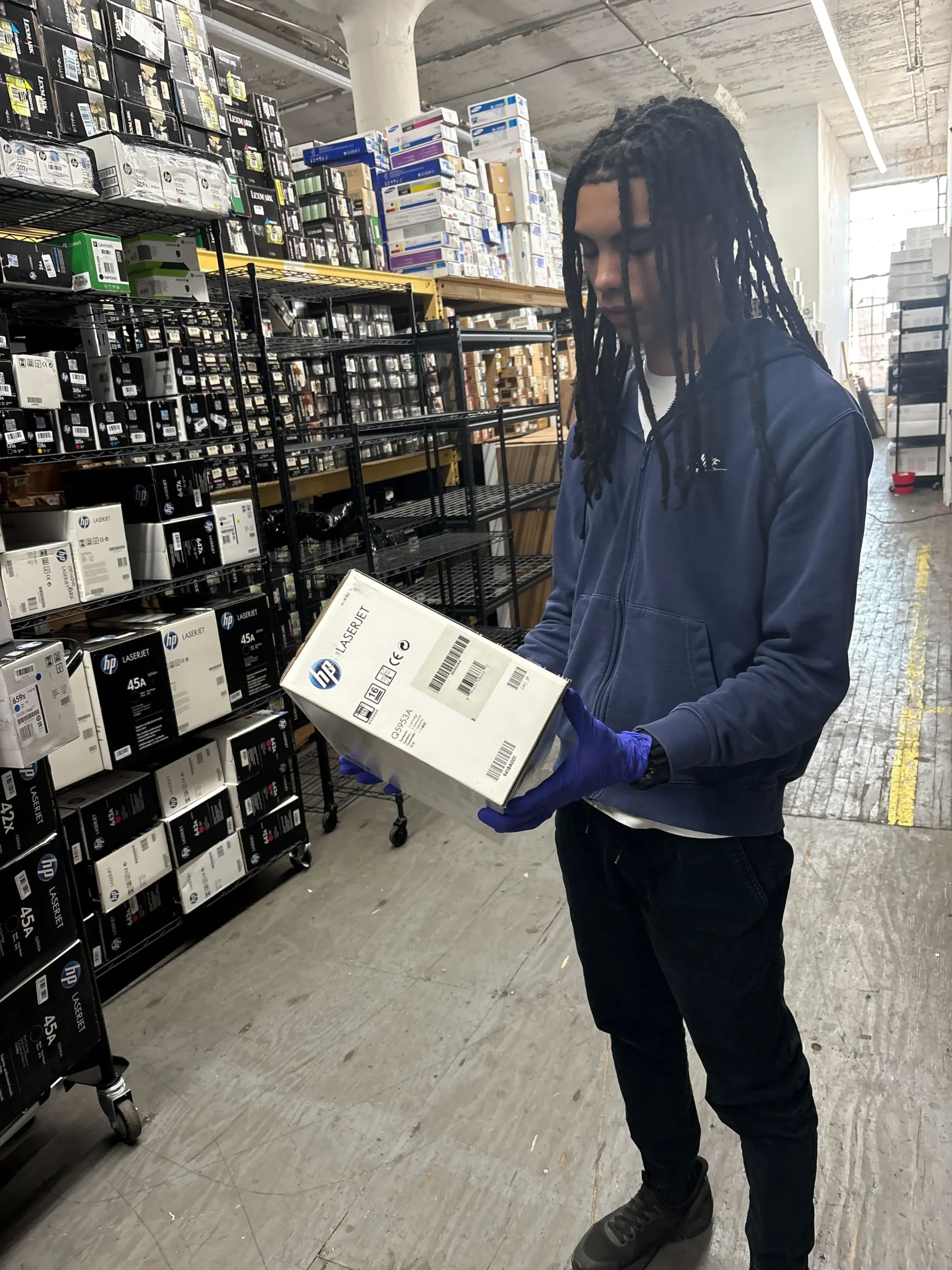
There is no universal price for unused toner.
Potential value can depend on:
- Brand
- Exact model
- OEM status
- Current demand
- Quantity
- Factory seals
- Packaging condition
- Buyer requirements
Toner Connect’s August 2026 guide notes that quotes can depend on brand, model, condition, quantity, and current demand.
Don’t assume the original retail price is the resale price.
Should You Sell Toner Locally or Online?
Local selling can reduce shipping, while online selling can provide access to a wider pool of potential buyers.
Your best option depends on what you’re selling and how much work you want to handle.
Local resale may make sense when a nearby office-equipment dealer wants your exact inventory.
Online marketplaces can provide broad exposure but may require listings, customer communication, fees, shipping, and return management.
Specialized toner buyers can simplify the process by evaluating an inventory directly.
For a company clearing dozens of cartridges after a printer upgrade, convenience may matter almost as much as the advertised offer.
How Can You Sell Toner Through Toner Connect?
Start by organizing your inventory and submitting eligible cartridge information for evaluation.

Toner Connect specializes in surplus printer supplies and publishes guidance specifically for people looking to sell unopened OEM toner.
A practical workflow is:
- Inventory your cartridges.
- Confirm models and quantities.
- Document their condition.
- Submit the toner for evaluation.
- Review the offer and terms.
- Follow shipping instructions for accepted supplies.
You can also read Toner Connect’s guide on selling unopened OEM toner cartridges or its guide to getting cash for unopened cartridges.
Why Can Selling Usable Toner Make Environmental Sense?
Keeping a usable product in circulation can extend its useful life before recycling or disposal becomes necessary.
The EPA places source reduction and reuse above recycling and composting in its non-hazardous materials and waste-management hierarchy.
EPA also states that source reduction can conserve energy and natural resources.
This doesn’t mean every toner cartridge has resale value. It means a usable product with legitimate demand doesn’t necessarily need to become waste immediately.
What Do Recent Waste Statistics Tell Us About Reuse?
Recent global data shows that waste management remains a major challenge, which gives broader context to reuse efforts.
The Global E-waste Monitor 2024 reported 62 billion kilograms of electronic waste worldwide in 2022.
Only 22.3% of that e-waste was documented as formally collected and recycled in an environmentally sound manner in 2022.
These figures describe global electronic waste broadly. They are not toner-cartridge-specific statistics.
For toner resale, the more directly relevant EPA principle is that reuse ranks above recycling when reuse is practical.
What Mistakes Should You Avoid When You Sell Toner?
Avoid opening cartridges, guessing model numbers, hiding damage, and shipping before you understand the buyer’s requirements.
Common mistakes include:
- Opening factory-sealed boxes
- Entering incomplete part numbers
- Calling compatible toner OEM
- Miscounting inventory
- Hiding water or box damage
- Taking unreadable photographs
- Assuming every old cartridge is valuable
- Comparing only advertised prices
- Ignoring fees or shipping terms
A clean, accurate inventory is usually more useful than an elaborate sales description.
What Should You Do With Toner That Cannot Be Sold?
If a cartridge has no practical resale or reuse option, investigate an appropriate manufacturer or recycling program.
Not every cartridge will qualify for resale.
Demand may be low because a printer family has become obsolete. Other cartridges may be opened, damaged, or otherwise unsuitable.
EPA‘s hierarchy puts recycling after source reduction and reuse but ahead of energy recovery and disposal.
Check your cartridge manufacturer’s current recycling program for product-specific instructions.
What Questions Do Sellers Commonly Ask About Toner Resale?
Most questions involve eligibility, condition, value, quantities, and where to find a buyer.
Can You Sell Toner That Is Several Years Old?
Possibly, because age alone does not determine whether a buyer wants a cartridge.
The exact model, condition, packaging, and current market demand also matter.
Ask the buyer rather than assuming an older cartridge is worthless.
Can You Sell One Toner Cartridge?
Some buyers may accept small quantities, but minimums and purchasing policies vary.
Check current buyer requirements before preparing a shipment.
For larger quantities, an inventory spreadsheet can make evaluation easier.
Can Businesses Sell Toner in Bulk?
Yes, bulk resale can be particularly relevant after fleet replacements, relocations, closures, or inventory cleanouts.
Group identical models together.
Record one quantity for each model rather than entering every identical box separately.
Does Damaged Packaging Affect Toner Value?
Yes, visible packaging damage can affect whether a cartridge qualifies and what a buyer is willing to offer.
Photograph damaged areas before requesting a quote.
Never represent a damaged box as being in perfect condition.
Is Selling Toner Better Than Throwing It Away?
If the toner remains usable and has resale demand, reuse can be considered before recycling or disposal.
EPA ranks source reduction and reuse as its most environmentally preferred strategy in the non-hazardous materials hierarchy.
What Is the Smartest Way to Sell Toner?
The smartest approach is to protect your cartridges, document exactly what you have, and choose a resale option based on eligibility, net value, and convenience.
When you sell toner, preparation matters. Keep OEM cartridges sealed. Record exact model numbers. Count quantities accurately. Document packaging condition. Then compare realistic offers instead of assuming an old retail price represents today’s resale value.
This approach works particularly well for businesses clearing toner after printer upgrades, relocations, IT standardization, or excess purchasing. If your unused cartridges meet current requirements, Toner Connect offers a specialized way to determine whether that surplus toner still has resale value.