
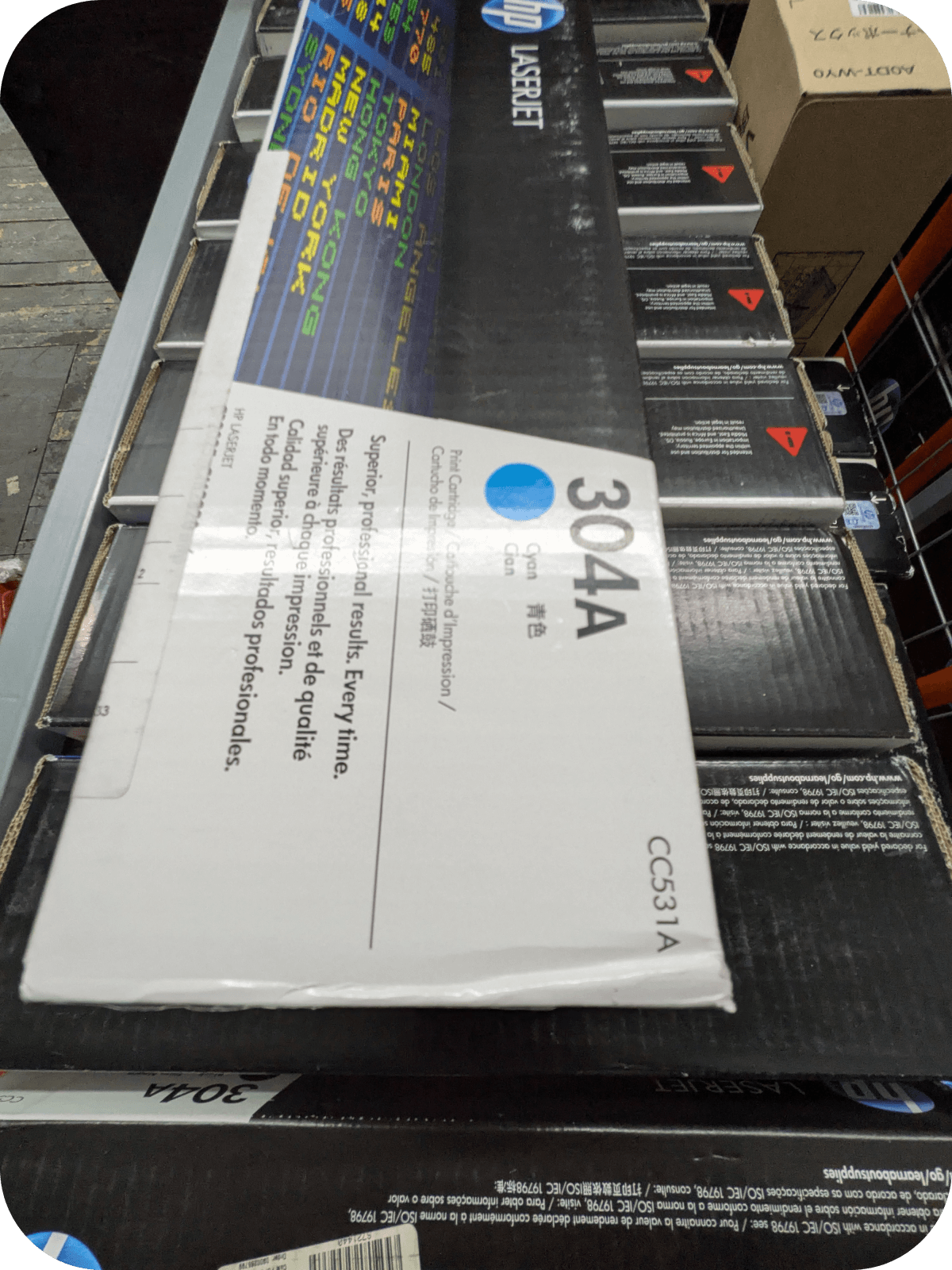
Excess Toner Cartridges in Schools and Offices: Where Do They Come From?
Excess toner cartridges usually build up in schools and offices because of bulk purchasing, printer replacements, inaccurate demand forecasts, emergency stock, office consolidations, and vendor changes. Large organizations are especially vulnerable because they manage many printers across departments, buildings, classrooms, and locations with different purchasing and replacement schedules.
Why Do Schools and Offices End Up With Excess Toner Cartridges?
Schools and offices accumulate excess toner when purchasing plans no longer match actual printer use.
Organizations often order toner months before it is needed. A later printer upgrade or reduction in printing can leave unopened cartridges without a compatible machine.

Toner Connect identifies bulk purchasing, equipment upgrades, department consolidation, emergency purchasing, and vendor-contract changes as common sources of surplus toner in schools and public institutions.
The problem becomes more noticeable in organizations that manage many buildings or departments.
What Are Excess Toner Cartridges?
Excess toner cartridges are usable printer supplies that an organization owns but no longer expects to consume.
Excess toner is also called surplus toner, overstocked toner, or unused toner inventory.
An excess cartridge may still be brand-new.
It may become surplus because the printer was removed rather than because anything is wrong with the cartridge.
Common categories include:
- OEM toner: Toner produced or branded by the original printer manufacturer.
- Factory-sealed toner: A cartridge that remains unopened in its original packaging.
- Surplus toner: Toner that exceeds an organization’s current needs.
- Obsolete inventory: Toner that no longer fits the organization’s active printer fleet.
Toner Connect notes that printer upgrades and excess purchasing frequently create overstocked toner in offices, schools, and IT environments.
Why Does Bulk Purchasing Create Excess Toner?
Bulk purchasing creates excess toner when organizations buy for expected demand that later decreases.
Large institutions often centralize office-supply purchasing.
Buying larger quantities can simplify procurement and reduce the risk of running out during busy periods.
However, forecasts are rarely perfect.
Toner Connect’s January 2026 public-institution guide identifies bulk purchasing and overestimating annual requirements as direct causes of excess printer supplies.
A school district may buy supplies for an entire academic year.
An office may purchase toner for several departments at once.
If printing drops, those unopened boxes remain in storage.
Why Do Printer Upgrades Leave Toner Behind?
Printer upgrades make existing toner surplus when new devices use different cartridge models.
A cartridge designed for one laser printer family usually cannot be moved automatically to another model.
Organizations therefore can replace perfectly functional printers while still holding unopened supplies for the old fleet.
Toner Connect identifies printer upgrades as a recurring cause of surplus toner inventory.
This issue becomes larger when an organization replaces dozens of devices at the same time.

Why Are IT Departments Especially Likely to Find Surplus Toner?
IT departments often discover surplus toner when they standardize multiple printer models into a smaller fleet.
Standardization can reduce technology complexity.
It can also make cartridges for retired printers immediately unnecessary.
Toner Connect notes that corporate IT teams frequently encounter old toner models during printer standardization projects.
Inventorying toner before a fleet migration can reduce the amount forgotten afterward.
Why Do Schools Have So Many Toner Cartridges?
Schools serve large populations and operate printers across classrooms, offices, libraries, and administrative facilities.
The scale of U.S. public education helps explain why printer supplies can become difficult to track.
The United States had 99,073 operating public elementary and secondary schools during the 2024–25 school year.
Those schools served approximately 49.27 million students during the same year.
Even modest quantities of backup toner across thousands of classrooms and offices can create substantial institutional inventory.
Why Can Large School Systems Accumulate Toner Faster?
Large school systems have more buildings, users, printers, and purchasing points to coordinate.
California alone reported 10,303 operating public schools and approximately 5.81 million students in 2024–25.
A district with many locations may replace hardware in phases.
That can leave some buildings using an older toner model while others move to new equipment.
When the final old printers disappear, leftover cartridges become excess inventory.
Why Does Emergency Stock Turn Into Surplus Toner?
Emergency stock becomes surplus when organizations keep backup cartridges that are never needed.
Running out of toner during exams, payroll processing, legal work, or administrative deadlines can disrupt operations.
Purchasing teams may therefore maintain safety stock.
Toner Connect identifies emergency bulk purchasing as one reason schools and government offices accumulate excess inventory.
The extra supply becomes a problem when printers change before the backup cartridges are consumed.
How Do Office Moves and Closures Create Excess Toner?
Moves and closures expose cartridges that were spread across closets, departments, and storage rooms.
Printer supplies are easy to forget because they may be stored far from the printers they support.
Office consolidation can bring those separate inventories together for the first time.
Toner Connect lists office consolidation and closures among common causes of unused toner.
A relocation therefore often reveals cartridges purchased several budget cycles earlier.

How Can Vendor or Managed-Print Changes Create Surplus Toner?
Vendor changes can make existing cartridges unnecessary when the new agreement introduces different printer hardware or supply arrangements.
Managed print programs can change which equipment an organization owns or supports.
A new contract can also standardize cartridge purchasing.
GSA meeting records from 2023 show printer toner being addressed directly within managed-print-services procurement.
Toner Connect also identifies changes in approved vendor contracts as a cause of surplus inventory in public institutions.
Existing toner should therefore be reviewed before a new print contract begins.
Why Can Decentralized Purchasing Make Toner Overstock Worse?
Decentralized purchasing can produce duplicate orders when departments cannot see one another’s inventory.
One office may order toner while another department already has compatible cartridges in storage.
The same issue can occur across schools in one district.
Central inventory records reduce this visibility problem.
The broader procurement challenge is well documented in government purchasing.
GAO reported in 2025 that federal category management aims to reduce duplicative purchasing and leverage buying power across common products and services.
The principle applies to toner management even though GAO’s figure covers common federal purchasing more broadly.
Where Are Excess Toner Cartridges Usually Found?
Excess cartridges commonly appear in supply closets, IT rooms, warehouses, administrative offices, and printer areas.
Surplus supplies are often scattered instead of stored in one central location.
Toner Connect describes unused toner being found in businesses, schools, warehouses, back offices, and forgotten storage areas.
A useful toner audit should check:
- Main supply closets
- IT storage rooms
- School administrative offices
- Department cabinets
- Warehouses
- Copier rooms
- Closed office locations
- Former printer stations
Finding cartridges early makes them easier to identify and manage.
What Should Schools Do With Excess Toner Cartridges?
Schools should inventory usable toner first and then follow district rules for reuse, transfer, resale, or recycling.
Public institutions may have procurement or surplus-property policies that determine how supplies can be sold.
Toner Connect’s January 2026 guide recommends that schools establish clear procedures before selling surplus toner.
EPA also maintains resources specifically for reducing waste in schools.
A practical school inventory should record:
Brand | Cartridge Model | Quantity | Factory Sealed | Box Condition | Original Printer
That information makes internal redistribution or external evaluation easier.
What Should Offices Do With Excess Toner Cartridges?
Offices should first determine whether cartridges can still be used elsewhere in the organization.
A cartridge may be surplus to one department but useful to another.
EPA has long encouraged toner-cartridge reuse as part of office source-reduction practices.
For factory-sealed OEM toner that is no longer needed internally, businesses can investigate resale before recycling.
Toner Connect specializes in evaluating qualifying unused toner.
Its toner buyers guide explains what buyers commonly evaluate.
Can Excess Toner Cartridges Have Resale Value?
Yes, some unopened OEM toner can retain resale value when there is demand for the exact model.
Value is not determined by the original retail price alone.
Buyers may consider:
- Brand
- Model number
- OEM status
- Factory seal
- Quantity
- Packaging condition
- Current market demand
Toner Connect identifies these characteristics as common factors in toner evaluation.
Businesses can use Toner Connect to explore whether eligible cartridges have current buyback value.
Why Should Reuse Be Considered Before Recycling?
Reuse keeps a usable product in service before its materials need to be processed as waste.
EPA specifically includes toner cartridges in its procurement guidance for non-paper office products.
EPA also promotes waste reduction and reuse programs for schools.
Resale will not make sense for every cartridge.
Opened, damaged, or obsolete supplies may be better candidates for an approved recycling program.
What 2024–2026 Statistics Put School and Office Toner in Context?
Current education and waste data show the large scale at which schools and organizations manage supplies.
Here are several dated facts:
- The United States operated 99,073 public elementary and secondary schools in 2024–25.
- Those schools served approximately 49.27 million students in 2024–25.
- EPA‘s school-waste guidance was updated in August 2026 and continues to encourage reduce, reuse, and recycle practices.
- Toner Connect’s January 2026 guide identifies bulk purchasing, equipment upgrades, emergency ordering, and vendor changes as causes of school and government toner surplus.
The education figures are not toner-usage statistics.
They provide context for the scale of supply management across U.S. schools.
How Can Schools and Offices Prevent Excess Toner in the Future?
Better inventory visibility and printer-change planning can reduce unnecessary toner purchases.
A simple process can help:
- Maintain one cartridge inventory.
- Track toner by exact part number.
- Assign cartridges to active printer models.
- Check existing stock before ordering.
- Review inventory before hardware upgrades.
- Move compatible toner between departments.
- Audit storage areas at least periodically.
Reducing excess inventory is usually easier than dealing with forgotten stock years later.
Where Do Excess Toner Cartridges Ultimately Come From?
Most excess toner comes from the gap between planned printing needs and what an organization actually uses.
Schools and offices have legitimate reasons to keep toner available.
The excess appears when equipment, staffing, locations, contracts, or printing behavior change faster than purchasing plans.
Bulk orders, printer upgrades, emergency stock, vendor changes, and office consolidation can all turn useful supplies into excess toner cartridges.
The best response is to identify those cartridges early.
Schools should follow their institutional surplus policies.
Businesses can redistribute usable toner internally or explore resale through services such as Toner Connect before considering recycling.