
Cash for Toners: What Makes Unused Cartridges Worth Money?
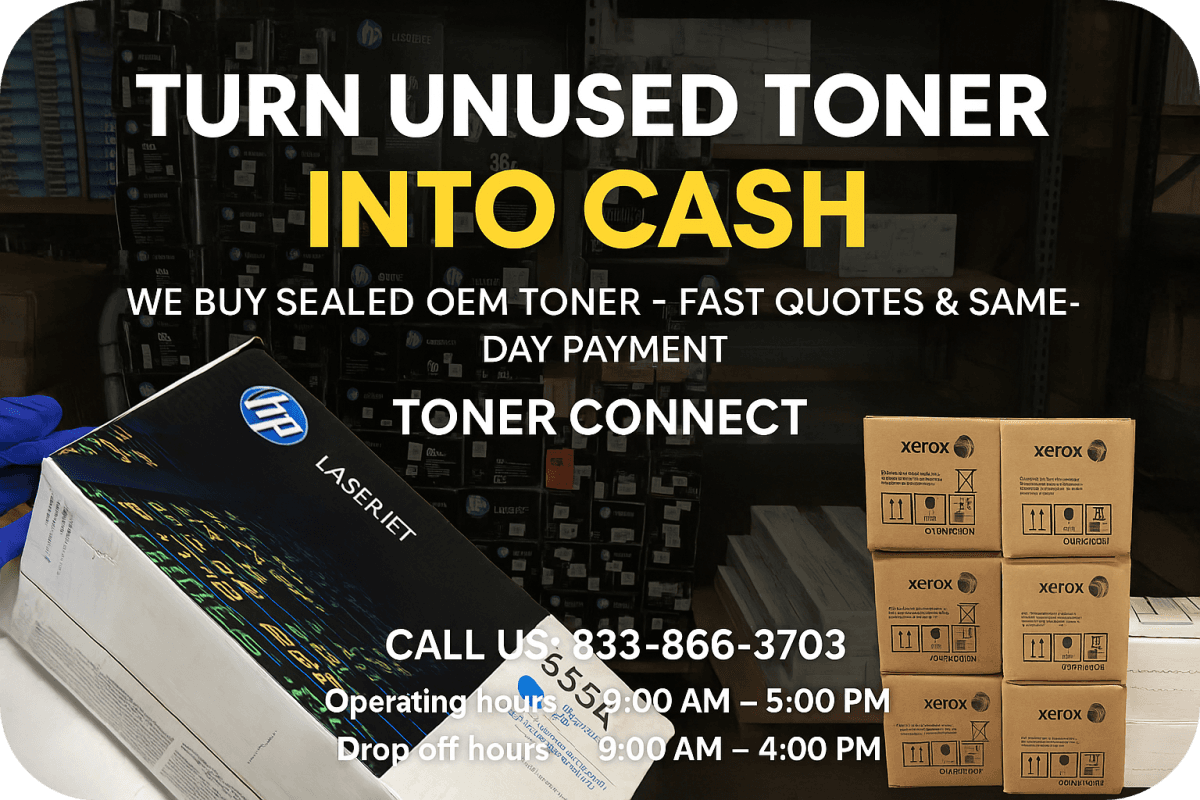
Cash for toners depends on whether unused cartridges still have resale demand. Factory-sealed OEM toner generally has stronger resale potential. Exact model number, brand, packaging condition, quantity, and current demand can also affect an offer. Specialized buyers such as Toner Connect evaluate these factors before providing a quote.
What Does “Cash for Toners” Actually Mean?
Cash for toners means selling eligible unused toner cartridges to a buyer instead of storing or discarding them.
A toner buyback company evaluates cartridges for potential resale. This is different from recycling a spent cartridge.
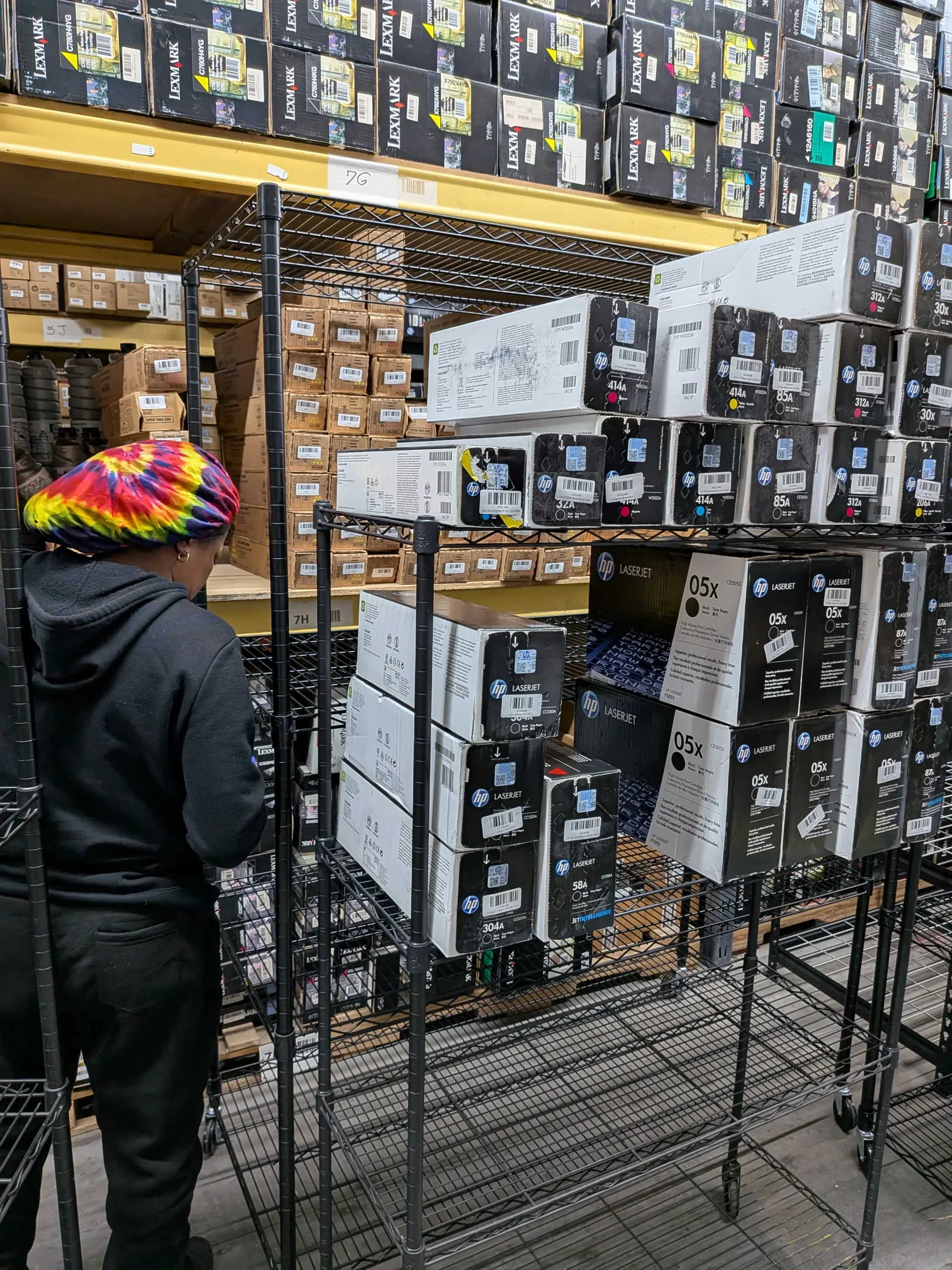
Toner Connect currently purchases qualifying factory-sealed OEM toner and other eligible printer supplies.
Useful definitions:
- OEM toner: A cartridge made or branded by the original printer manufacturer.
- Compatible toner: A new third-party cartridge designed for another manufacturer’s printer.
- Remanufactured toner: A previously used cartridge that has been rebuilt and refilled.
- Factory-sealed toner: A cartridge that remains unopened in its original manufacturer packaging.
- Surplus toner: Usable toner that an organization no longer needs.
These distinctions matter because toner buyers do not necessarily purchase every cartridge type.
What Makes an Unused Toner Cartridge Worth Money?
An unused cartridge is more likely to have resale value when it is OEM, factory sealed, correctly identified, in good condition, and still in market demand.
There is no universal resale price for toner.
Toner Connect’s August 2026 selling guide identifies brand, exact model, condition, quantity, and current demand as factors that can affect quotes.
The five main factors are:
- OEM status
- Exact model number
- Factory seal
- Packaging condition
- Current demand
Original retail price alone does not determine today’s buyback value.
Why Can OEM Toner Be More Valuable?
OEM toner can have stronger resale potential because buyers can clearly identify its original manufacturer and product specifications.
OEM stands for Original Equipment Manufacturer.
Examples include genuine cartridges branded by HP, Canon, Brother, Xerox, and Lexmark.
Toner Connect currently accepts qualifying factory-sealed products from major OEM brands. It does not currently accept compatible, generic, remanufactured, or refilled products.
This policy is buyer-specific.
Other toner buyers may have different eligibility requirements.
Why Does a Factory Seal Matter When Getting Cash for Toners?
A factory seal helps a buyer verify that a toner cartridge has not been opened or used.
Toner Connect currently requires qualifying products to remain in factory-sealed boxes.
Canon also advises users to store toner without opening it until the cartridge is needed. Canon recommends cool storage away from direct sunlight.
Do not open a sealed cartridge merely to check the product.
The exterior box normally provides the information needed to identify it.
Can Damaged Toner Boxes Still Be Worth Money?
Packaging damage can affect resale potential, so sellers should disclose damage before requesting a final offer.
A crushed box is not the same as an opened cartridge.
However, packaging condition is one factor Toner Connect identifies when evaluating unused toner.
Check each box for:
- Broken seals
- Water damage
- Crushed corners
- Tears
- Faded packaging
- Missing labels
- Heavy writing
Take clear photographs of any damage.
Never describe damaged inventory as pristine.
Why Does the Exact Model Number Change Toner Value?
The exact model number tells a buyer which cartridge you own and which printers can use it.
“HP black toner” is not specific enough for an accurate valuation.
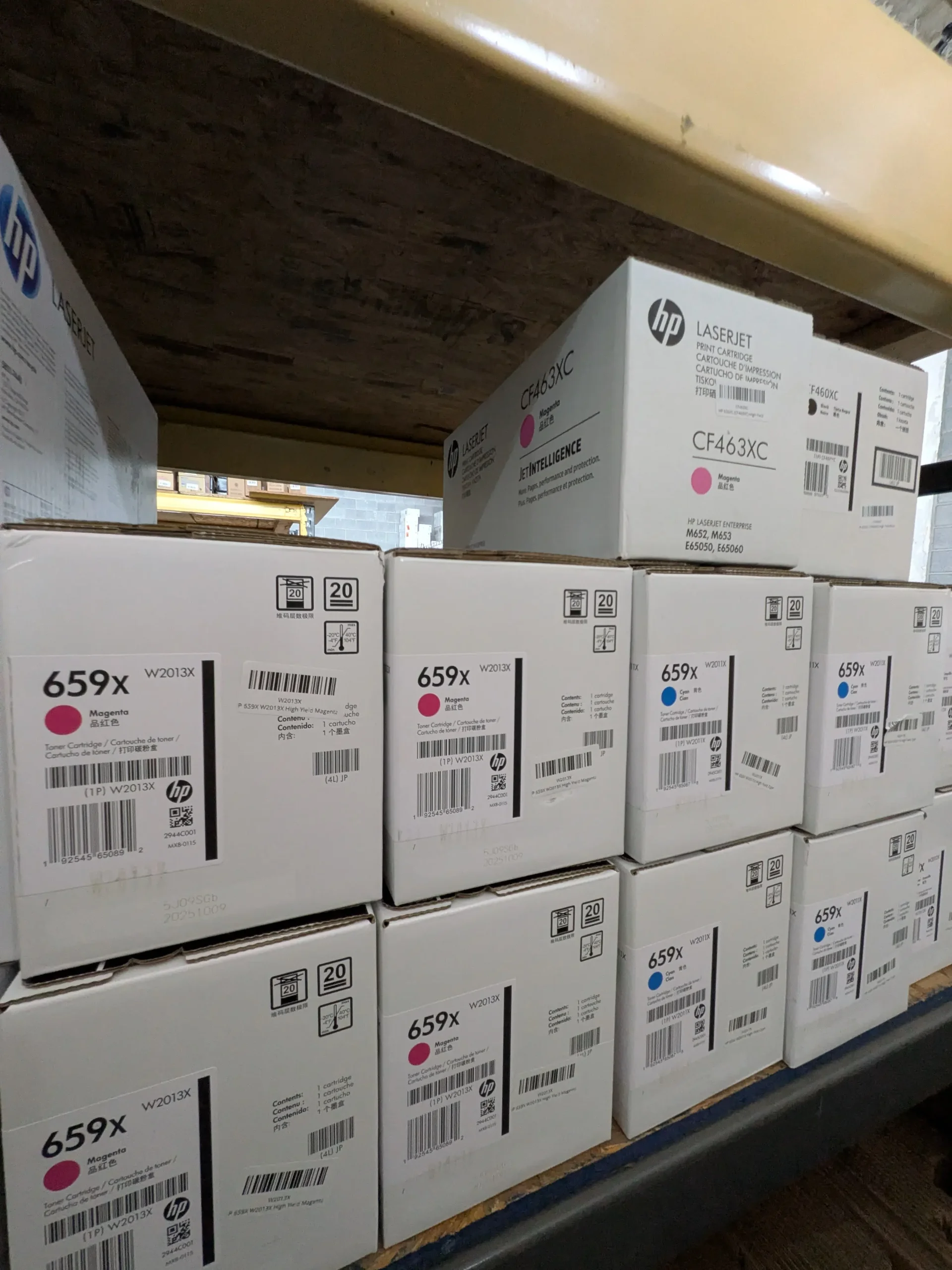
Standard-yield and high-yield versions can have different part numbers. Toner Connect recommends copying the complete model number from the packaging.
For example, HP identifies its 213X W2130X as a high-capacity cartridge with a declared yield of about 9,000 standard pages.
Record every letter and number.
Does High-Yield Toner Automatically Mean More Cash?
No, high-yield capacity can make a cartridge commercially attractive, but it does not guarantee a higher resale offer.
High-yield cartridges are designed to produce more pages than certain lower-capacity alternatives.
For example, HP lists its 213Y extra-high-yield black cartridge at approximately 18,000 standard pages.
HP also warns that declared page yield is a comparison measure rather than a guarantee of actual printing results.
Buyback value still depends on the exact product and current demand.
Why Does Market Demand Affect Cash for Toners?
Market demand matters because a cartridge needs potential buyers who still use compatible printers.
An older cartridge is not automatically valuable simply because it is difficult to find.
Demand can decline when businesses retire the printers that use a cartridge.
Toner Connect’s August 13, 2026 guide explicitly identifies current demand as one factor affecting toner quotes.
This is why the same cartridge can receive different offers at different times.
Does Quantity Affect What Toner Buyers Will Offer?
Quantity can influence an offer because buyers evaluate both the cartridge itself and the amount of inventory being sold.
Toner Connect includes quantity among the information used when preparing a quote.
Bulk inventories are common after printer replacements, office moves, and over-ordering.
For larger inventories, create a simple spreadsheet:
| Brand | Model | Color | Quantity | Condition |
|---|---|---|---|---|
| HP | W2020X | Black | 8 | Factory sealed |
| Brother | TN-850 | Black | 5 | Factory sealed |
| Canon | 055 | Cyan | 3 | Factory sealed |
Accurate counts make a bulk quote easier to evaluate.
Who Is Most Likely to Have Toner Worth Selling?
Offices, schools, IT departments, government organizations, and individuals can all end up with unused toner after their printing needs change.
Printer upgrades are a common source of surplus cartridges.
Office relocations and purchasing mistakes can create the same problem.
Why Might Offices Have Valuable Unused Toner?
Offices often have unused toner because they purchase backup supplies before replacing or consolidating printers.
A printer fleet change can leave perfectly unused cartridges without an active machine.
Toner Connect lists printer upgrades, overstock purchasing, remote-work transitions, and equipment replacement among reasons businesses accumulate toner.
Factory-sealed inventory should therefore be evaluated before disposal.
Why Might Schools Have Toner to Sell?
Schools can accumulate surplus toner when printer inventories, purchasing plans, or equipment change.
Schools may manage printers across classrooms, libraries, administrative offices, and district facilities.
Toner buyers can serve schools and other organizations with qualifying surplus supplies. Toner Connect‘s 2026 toner buyer guide specifically identifies schools among potential sellers.
Public schools should follow applicable district rules before selling institutional property.
Why Might IT Departments Find Unused Toner?
IT departments may uncover unused toner during printer fleet upgrades or hardware standardization.
A replacement printer may require a completely different cartridge family.

Toner Connect identifies printer upgrades and equipment replacements as common reasons businesses end up with unopened supplies.
Checking toner inventory before retiring printers can reduce stranded supplies.
Does Location Matter When Selling Toner for Cash?
Location can affect convenience, but online buyers give sellers an alternative when there is limited demand nearby.
Local office-equipment resellers can work well when they need the exact cartridges being offered.
The limitation is geographic reach.
Toner Connect‘s August 2026 guide identifies specialized buyback companies, online marketplaces, local office-supply resellers, liquidators, and classifieds as possible resale channels.
For sellers outside large cities, online quotes can broaden the potential buyer pool.
How Much Cash Can Unused Toner Be Worth in 2026?
There is no standard payout because every cartridge must be evaluated according to its model, condition, quantity, and demand.
Toner Connect currently advertises potential payments of $10 to $300 per unused toner cartridge.
That range is a Toner Connect marketing claim.
It is not an industry-wide average or guaranteed payout.
A cartridge’s retail price should not be treated as its resale value.
What 2026 Facts Should Toner Sellers Know?
Current buyer policies show why cartridge identification and condition matter when pursuing cash for toners.
As of 2026, Toner Connect says it has purchased more than 100,000 toner cartridges and worked with more than 7,000 businesses.
The company currently accepts qualifying factory-sealed OEM toner.
These numbers describe Toner Connect’s service.
They should not be presented as statistics for the entire toner resale market.
How Can You Protect the Value of Unused Toner?
Keep toner sealed, store it properly, and protect the original packaging from environmental damage.
Canon recommends keeping cartridges unopened until needed. Canon also advises avoiding direct sunlight, high temperatures, excessive humidity, dust, and locations prone to condensation.
A few simple habits can help:
- Keep factory seals intact.
- Avoid damp storage rooms.
- Protect boxes from crushing.
- Keep labels readable.
- Avoid direct sunlight.
- Record inventory before moving it.
Good storage does not guarantee resale value.
It simply helps preserve cartridge condition.
How Can You Find Out What Your Toner Is Actually Worth?
Request a current quote using the exact brand, model, quantity, and condition instead of estimating from the original purchase price.
Toner Connect allows sellers to submit a quote request through a form, photographs, or an inventory list.
Before submitting, collect:
- Manufacturer
- Exact model number
- Color
- Quantity
- OEM status
- Factory-seal status
- Packaging condition
You can review the Toner Connect selling process or its guide on preparing unused toner for resale.
Should You Sell or Recycle Unused Toner?
Usable toner with resale demand can be evaluated for resale before recycling is considered.
A sealed cartridge can potentially remain in use without first being processed as waste.
The U.S. EPA’s waste-management hierarchy places source reduction and reuse above recycling among preferred approaches for non-hazardous materials.
If a cartridge has no resale value, investigate the manufacturer’s take-back program or an appropriate recycling option.
What Ultimately Makes Cash for Toners Possible?
Unused toner is worth money when a buyer sees viable resale demand for the exact cartridge in its current condition.
A high original purchase price does not guarantee a high offer.
OEM status, factory seals, model number, condition, quantity, and demand all help determine resale potential.
Before recycling surplus cartridges, inventory them and check whether they qualify for resale. Businesses, schools, IT departments, and individuals can use Toner Connect to request a current quote for eligible factory-sealed OEM toner.