
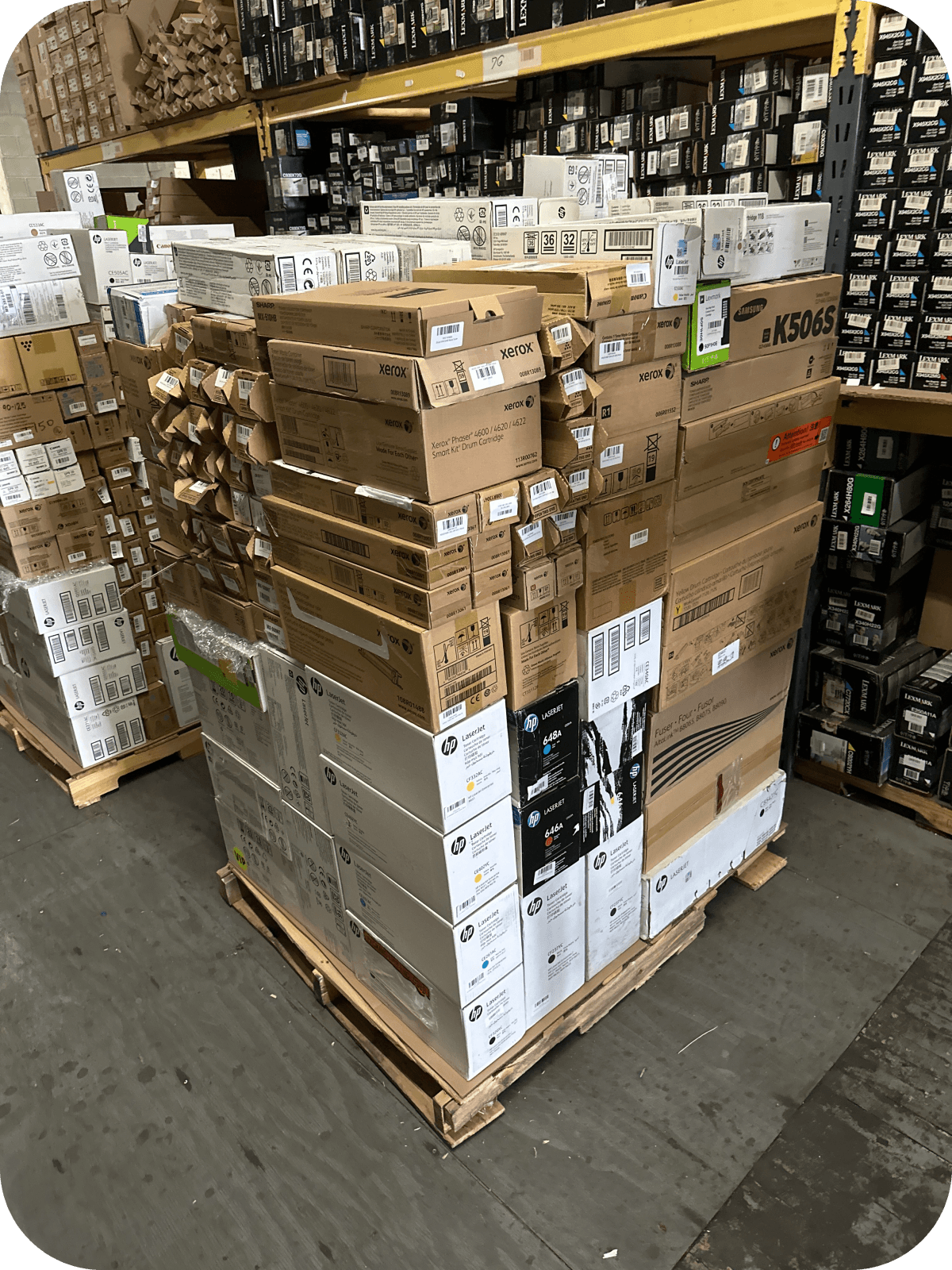
Can Toner Freeze? What Cold Temperatures Do to Toner Cartridges
Can toner freeze? Toner powder does not freeze like a water-based liquid, but toner cartridges can still be affected by extreme cold. Some HP cartridges are rated for packaged storage down to -20°C (-4°F). The bigger concern after cold storage is temperature change and condensation, so always follow your cartridge’s specifications.

Can Toner Freeze in Cold Temperatures?
Toner powder isn’t a liquid, so “freezing” isn’t quite the right description, but extreme cold can still affect the complete cartridge.
Laser printer toner consists primarily of very fine dry particles rather than water-based liquid. That means a toner cartridge behaves differently from something like a bottle of water left in freezing conditions.
However, a toner cartridge contains more than toner powder. Depending on its design, it can include:
- Plastic housing
- Seals
- Rollers
- Gears
- Electronic components
- Photosensitive components
Those parts can be sensitive to temperature changes and environmental conditions.
HP specifically states that LaserJet toner cartridges contain components sensitive to temperature, humidity, and light.
So, while asking “can toner freeze?” is useful, a better question is: Can freezing temperatures affect a toner cartridge?
The answer is yes.
What Is Toner Made Of?
Printer toner is a dry powder engineered to be transferred and fused onto paper during laser printing.
Definition: Toner is a fine powdered printing material used in laser printers and photocopiers. Unlike inkjet cartridges, which contain liquid ink, laser cartridges contain dry toner.
During printing, toner particles are transferred to the page and then fused to the paper using heat.
This distinction is important in cold weather because toner doesn’t behave like liquid ink.
Toner: Dry powder used in laser printers.
Ink: Liquid printing material used in inkjet printers.
Toner cartridge: The complete replaceable unit that contains toner and, depending on the design, additional mechanical or imaging components.
How Cold Is Too Cold for Toner Cartridges?
There is no universal minimum temperature because storage specifications vary by manufacturer and cartridge model.
This is where manufacturer specifications become especially important.
HP’s current shipping and storage guidance lists a normal packaged-storage range of 0°C to 35°C (32°F to 95°F). It also specifies a severe-low condition of -20°C to 0°C (-4°F to 32°F) for up to one-tenth of the total storage period.
Individual cartridges can have their own specifications. For example, HP’s current specifications for the 49A Black Original LaserJet Toner Cartridge list:
- Operating range: 50°F to 90.5°F
- Storage range: -4°F to 104°F
- Non-operating humidity: 10% to 90% RH
Other HP toner families similarly specify storage down to -20°C (-4°F).
These numbers should not be interpreted as universal limits for every toner cartridge. Check the packaging or documentation for your exact model.
What Happens When a Toner Cartridge Gets Very Cold?
Extreme cold and rapid temperature changes can create conditions outside the cartridge’s recommended operating environment.
A toner cartridge that has spent hours in a freezing delivery truck or cold garage may be far colder than the room where the printer operates.
Potential concerns include:
- Condensation after moving indoors
- Temperature-related print-quality problems
- Stress from extreme environmental changes
- Moisture exposure
- Cartridge components operating outside their intended temperature range
The critical distinction is between storage temperature and operating temperature.
A cartridge might tolerate colder temperatures while packaged and stored than it should experience during actual printing.
For example, HP’s 49A specifications list storage as low as -4°F, but its operating range starts at 50°F.
In other words, “safe to store temporarily” does not automatically mean “ready to install and print.”
Is Condensation a Problem After Toner Gets Cold?
Yes. Moving a very cold cartridge into a warm, humid room can create condensation concerns.
Condensation occurs when moisture in warmer air encounters a sufficiently cold surface.
HP’s current cartridge storage specifications explicitly state that its listed storage conditions assume no condensation.
That makes sudden temperature changes worth avoiding.
Imagine toner sitting overnight in a freezing delivery vehicle. Bringing the box into a heated office immediately creates a substantial temperature difference.
Instead of opening and installing it immediately, keep the cartridge packaged while it returns toward the environmental conditions recommended for use.
What Should You Do If a Toner Cartridge Was Left in the Cold?
Keep it packaged, move it to a suitable indoor environment, and allow it to reach appropriate operating conditions before installation.

Don’t panic if your toner shipment arrives freezing cold.
A sensible process is:
- Bring the packaged toner indoors.
- Leave the cartridge sealed.
- Place it in a clean, dry environment.
- Avoid direct heat.
- Let its temperature stabilize naturally.
- Check the manufacturer’s instructions.
- Install it only after it reaches appropriate operating conditions.
Avoid trying to accelerate warming with:
- Hair dryers
- Space heaters
- Radiators
- Heating vents
- Direct sunlight
Gradual acclimation reduces abrupt environmental change.
If the manufacturer specifies a particular acclimation period, follow that instruction rather than relying on a generic timeframe.
Should You Open a Cold Toner Cartridge?
It’s better to keep a cold cartridge in its protective packaging while its temperature stabilizes.
Original packaging provides useful protection.
HP recommends keeping LaserJet toner cartridges in their original box and packaging until needed because the packaging helps protect them against light, excessive humidity, and dust.
Keeping a cold cartridge packaged while it adjusts to room conditions also limits unnecessary exposure.
Once you’re ready to install it, follow the instructions provided for that specific cartridge.
Can Toner Cartridges Be Stored in a Garage During Winter?
A climate-controlled indoor location is generally preferable to an unheated garage with large temperature and humidity swings.
A garage might seem like convenient storage for bulk toner, but conditions can fluctuate dramatically between day and night.
HP specifically advises against storing cartridges in environments with extreme changes in humidity or temperature. It recommends storing toner in the same type of controlled environment where the printer will be used.
Better storage locations include:
- Climate-controlled office supply rooms
- Indoor closets
- Temperature-controlled warehouses
- Clean, dry cabinets
Avoid areas with repeated freezing and warming cycles when possible.
Can You Leave Toner Cartridges in a Car?
Long-term car storage isn’t recommended because vehicle interiors can experience extreme temperature fluctuations.
A vehicle can become very cold overnight in winter and extremely hot when exposed to sunlight.
HP explicitly lists a car for a long period of time among conditions that should be avoided when storing LaserJet toner cartridges.
If toner has been temporarily transported in a cold vehicle, allow it to acclimate appropriately before use.
Does Cold Weather Permanently Ruin Toner?
Not necessarily. Exposure to cold does not automatically mean a cartridge is unusable.
A cartridge that experienced cold temperatures may still work normally, particularly if the exposure remained within its manufacturer’s packaged-storage limits.
Before discarding it:
- Check the cartridge for physical damage.
- Look for moisture or condensation.
- Allow it to reach suitable operating conditions.
- Review its storage specifications.
- Install it according to manufacturer instructions.
- Check print quality.
Don’t assume that simply reaching 32°F (0°C) means a toner cartridge has been destroyed. HP’s documented packaged-storage specifications for several toner products extend below freezing.
What Are the Signs of Cold-Related Toner Problems?
Look for physical damage, moisture, cartridge errors, or persistent print-quality changes after the cartridge has properly acclimated.
Possible warning signs include:
- Unusual streaking
- Uneven printing
- Faded output
- Cartridge errors
- Visible moisture
- Damaged housing
- Toner leakage
One bad printed page doesn’t necessarily prove cold damage. Printers can produce poor output for many reasons, including drum, fuser, paper, maintenance, or cartridge problems.
If problems continue, consult the troubleshooting documentation for your printer model.
Toner Storage Temperature Facts
Current manufacturer specifications show that some packaged toner cartridges can tolerate below-freezing storage, but operating temperatures are considerably warmer.
Here are several useful figures available in 2026:
| Storage Factor | Example HP Guidance |
|---|---|
| Normal packaged storage | 0°C to 35°C (32°F to 95°F) |
| Severe-low packaged storage | -20°C to 0°C (-4°F to 32°F) |
| Severe-low duration | Up to 1/10 of total storage period |
| Example cartridge storage range | -20°C to 40°C (-4°F to 104°F) |
| Condensation | Should not occur |
HP also lists a 2.5-year storage-plus-use period for cartridges covered by its current shipping and storage guidance.

Again, these are HP examples rather than universal toner-industry specifications. Always use the limits provided for your cartridge.
How Should Toner Cartridges Be Stored?
Store toner in its original packaging in a clean, controlled environment away from temperature extremes, humidity, dust, and light.
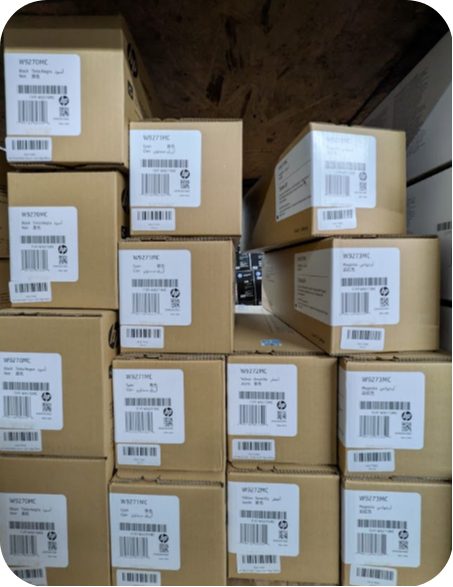
HP’s general storage guidance recommends keeping toner cartridges in their original packaging until they’re needed.
Good storage practices include:
- Keep toner indoors.
- Leave factory packaging intact.
- Avoid direct sunlight.
- Avoid extreme humidity.
- Prevent rapid temperature changes.
- Protect boxes from water.
- Follow model-specific orientation instructions.
- Keep cartridges away from heaters and HVAC vents.
One important detail: storage-orientation instructions can vary among cartridge products and packaging configurations. Follow the directions for your specific cartridge rather than assuming one rule fits every model.
Does Freezing Affect Toner Resale Value?
Storage condition can matter when selling toner, especially if the packaging or cartridge shows environmental damage.
If you have unopened OEM toner you no longer need, maintaining good storage conditions helps protect its condition.
Before selling, inspect toner boxes for:
- Water damage
- Broken seals
- Crushing
- Moisture
- Fading
- Torn packaging
Factory-sealed OEM cartridges may have resale value depending on model, demand, age, and condition.
Toner Connect provides an option for businesses and individuals looking to sell eligible surplus toner rather than leaving it unused in storage.
Should Cold-Exposed Toner Be Recycled?
Don’t automatically recycle a cartridge simply because it became cold; first determine whether it remains usable.
A cold cartridge may still function perfectly after appropriate acclimation.
If toner is genuinely unusable, manufacturer take-back or appropriate recycling programs may be available.
The U.S. EPA’s materials-management hierarchy places source reduction and reuse ahead of recycling, followed by energy recovery and treatment or disposal.
For unopened OEM toner that’s no longer needed but remains in good condition, exploring reuse or resale before recycling can therefore make practical sense.
Frequently Asked Questions About Toner and Freezing
Cold exposure isn’t automatically fatal to toner; temperature limits, condensation, and proper acclimation are the main considerations.
Can toner freeze overnight?
Toner powder doesn’t freeze like water, but an overnight cold exposure can place the cartridge below its normal operating range.
Check the storage limits for your exact cartridge and allow a cold cartridge to acclimate before use.
Can toner survive below 32°F?
Some toner cartridges are rated for packaged storage below 32°F.
For example, multiple current HP cartridge specifications list storage limits down to -4°F (-20°C).
That does not mean every toner cartridge has the same rating.
Can I print immediately after bringing frozen-cold toner indoors?
Don’t rush to install a very cold cartridge.
Allow it to stabilize under the environmental conditions recommended by its manufacturer, particularly because condensation should be avoided.
Does toner need to be refrigerated?
No. Toner should be kept in an appropriate controlled storage environment, not refrigerated.
HP recommends storage within the environmental specifications provided for the cartridge and printer.
Is heat worse than cold for toner?
Both temperature extremes can be problematic, so stay within the manufacturer’s specified storage range.
HP’s general guidance advises against temperatures above 40°C (104°F) and environments with extreme temperature fluctuations.
Conclusion: Can Toner Really Freeze?
Toner doesn’t freeze like a liquid, but freezing weather can expose the complete cartridge to conditions outside its ideal operating environment.
So, can toner freeze? Not in the same way water or liquid ink freezes. More importantly, some toner cartridges are actually rated for packaged storage below 32°F, with certain HP products specifying storage as low as -4°F (-20°C).
The bigger concerns are extreme exposure, rapid temperature changes, and condensation. If toner arrives very cold, keep it packaged, bring it into a suitable indoor environment, and allow it to acclimate naturally before installation. For unopened OEM cartridges you no longer need, Toner Connect can also help you explore potential resale options.